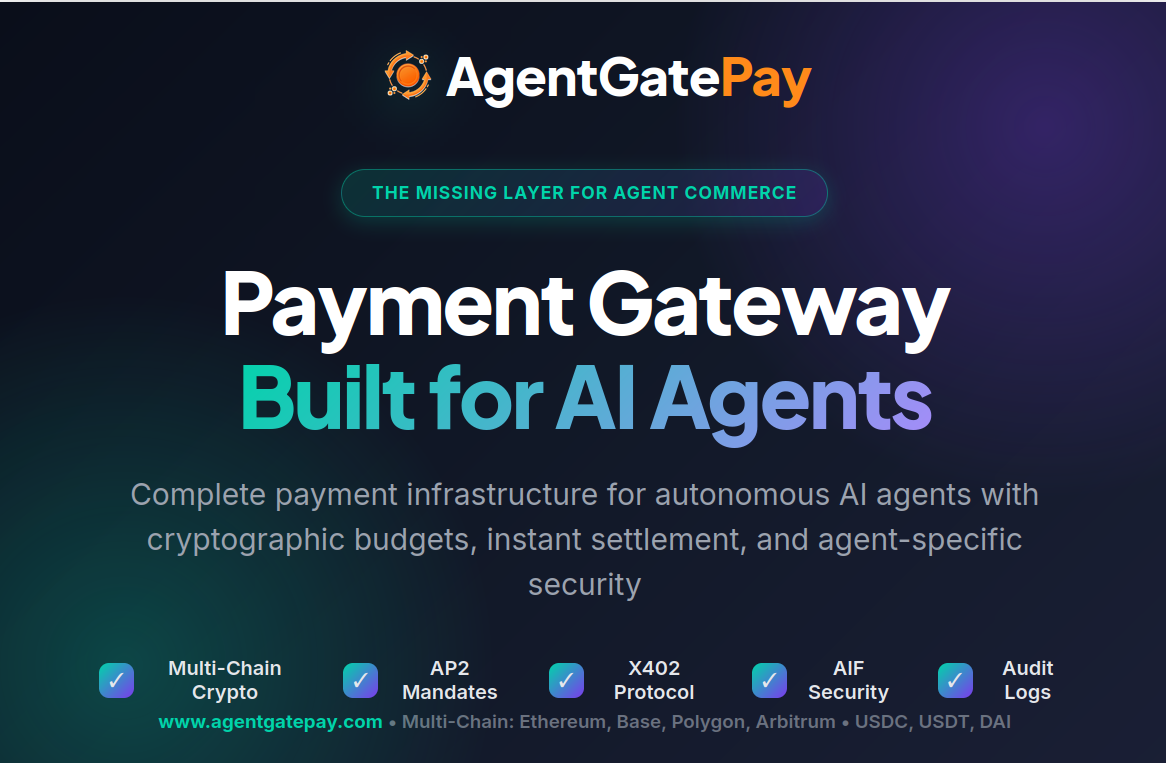
AgentGatePay is a payment infrastructure designed specifically for the agent economy, enabling AI agents to make autonomous payments without human intervention. Built on blockchain and protocol-agnostic principles, it provides a secure, scalable, and flexible solution for handling micropayments, budget controls, and instant settlements across multiple chains and payment methods. As AI agents become more autonomous, the need for a dedicated payment layer has grown, and AgentGatePay fills this gap by offering a robust framework that supports SaaS-style mandates, HTTP 402 monetization, and agent-specific security protocols.
The platform is built with developers and merchants in mind, offering SDKs, documentation, and examples to simplify integration. It supports multi-chain crypto (Ethereum, Base, Polygon, Arbitrum) and plans to expand to traditional payment rails like cards and ACH. AgentGatePay also includes features such as cryptographic budget controls, real-time tracking, and audit logging, making it ideal for businesses looking to monetize agent-driven transactions securely and efficiently.
AgentGatePay operates through a structured process involving four main steps:
This workflow enables seamless, automated transactions while maintaining security and transparency.
| Benefit | Description |
|---|---|
| Autonomous Payments | Enables AI agents to transact independently without human oversight |
| Multi-Method Support | Supports crypto and future traditional payment methods through a single API |
| Security for Agents | Implements AIF firewall, replay protection, and behavioral scoring |
| Budget Controls | Offers SaaS-style spending limits and real-time USD tracking |
| Instant Settlement | Provides sub-5 second settlement times for faster commerce |
| Audit & Compliance | Maintains immutable logs for fraud prevention and regulatory compliance |
| Low Fees | Charges only 0.5% commission, split between merchant and AgentGatePay |
AgentGatePay is ideal for developers building agent-based applications, merchants looking to monetize agent traffic, and service providers wanting to accept micropayments from other agents.