
Not All Real-Time Speech Recognition APIs Are Truly Real-Time: Pure vs. Pseudo-Streaming
A “real-time” speech recognition API may return text during an utterance—or wait until the sentence ends. Compare pure and pseudo-streaming by result timing, connection model, and interim results.
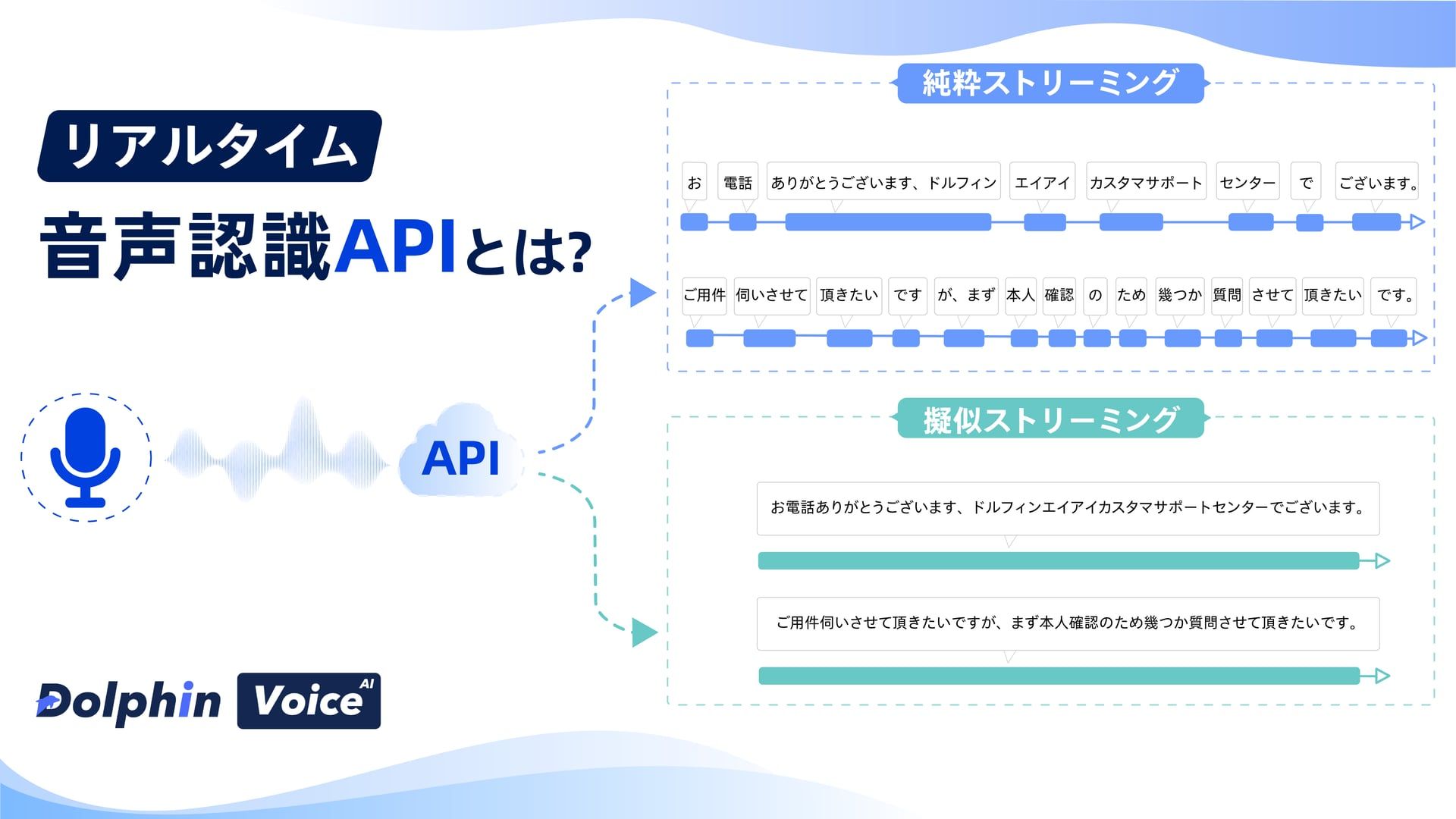
A product page says “streaming,” so you expect text to appear as the speaker talks. After integration, however, the screen stays blank until the sentence ends and the full transcript arrives at once.
That is not merely a difference of a few hundred milliseconds. It is a different result-delivery model, and it changes the experience of captions, compliance monitoring, and Voice Agents.
The short answer
Pure streaming continuously returns interim results during an utterance. Pseudo-streaming usually waits for the sentence to end before returning complete text. For real-time intervention, ask when text first appears—not whether the marketing page says “streaming.”
 DolphinVoice use cases, capabilities, and pricing
The difference is when text arrives, not just how fast it feels
A speech recognition API sends audio from a microphone, phone call, or live stream to a recognition engine and returns text to your application. Both approaches may receive audio continuously, but they deliver text on very different timelines.
 DolphinVoice real-time speech recognition demo
Pure streaming: return text while speaking
The client keeps a persistent connection such as WebSocket and sends audio in chunks measured in tens of milliseconds. The engine returns interim results first, then turns them into a final result when the sentence ends.
Pseudo-streaming: wait for the sentence
Audio is sent in segments or fixed-interval requests, and the service returns a complete sentence after detecting its end. It is easier to implement and can be sufficient for short commands or retrospective use, but longer utterances mean longer visible waits.
 Pure versus pseudo-streaming recognition comparison
Side-by-side comparison
| Comparison | Pseudo-streaming | Pure streaming |
|---|---|---|
| Text appears | After the sentence ends | During the utterance |
| Result unit | Whole sentence at once | Characters or words incrementally |
| Connection | Intermittent HTTP requests | Persistent WebSocket |
| Interim results | No | Yes (interim / final) |
| Real-time intervention | Difficult | Possible |
| Implementation | Relatively simple | More involved |
Three questions that reveal true streaming
Do not rely on the words “real time” or “streaming” alone. Confirm these three behaviors.
Three questions that reveal true streaming
1: Does text appear while the person is still speaking? If not, the service is likely pseudo-streaming.
2: Does the API continuously return interim results? Final results alone do not provide a pure-streaming experience.
3: Does it maintain a persistent connection such as WebSocket? Closing every request is closer to pseudo-streaming.
How DolphinVoice delivers pure streaming
DolphinVoice receives audio over a persistent WebSocket connection so text can appear during the utterance. It combines recognition, concurrency, and operational capabilities and can be integrated into an existing application with a custom front end.
Text while speaking
Returns characters or words incrementally and transitions interim results into final results.
Low-latency processing
0.5 ms-class audio-frame processing, about 800 ms end-of-sentence finalization, about 1,000 ms first response, and RTF up to 0.3.
High concurrency
One API key supports up to 3,000 concurrent connections for calls or live streams.
Word-level speaker labels
Labels the speaker at word level so records retain who said what.
Operational controls
Supports up to 20,000 hotwords, filler removal, correction_words, and ITN.
Usage-based pricing
Pricing starts at JPY 72 per hour, making usage costs easier to estimate.
Technical specifications
| Item | Specification |
|---|---|
| Method | Pure streaming (persistent WebSocket) |
| Processing latency | 0.5 ms (audio frame) |
| End-of-sentence finalization | About 800 ms |
| First response | About 1,000 ms |
| RTF | 0.3 or less |
| Concurrent connections | Up to 3,000 |
| Continuous operation | Up to 37 hours |
| Character Error Rate (CER) | 5%–10% |
| Hotword limit | Up to 20,000 |
| Price | From JPY 72/hour |
Five situations where text cannot wait
Pure streaming matters most when the workflow cannot wait for the end of a sentence.
Before: Calls are transcribed after they end, so quality checks and coaching happen later.
After: Calls are transcribed live and risky or prohibited language can be detected immediately.
Value: Supervisors can intervene as an issue develops instead of responding after the damage is done.
Before: Captions are prepared afterward, leaving live viewers without timely information.
After: Captions appear while the speaker talks.
Value: Improves access for deaf, hard-of-hearing, and multilingual audiences while reducing delay-driven drop-off.
Before: The agent waits for the full utterance before preparing a response, creating an unnatural pause.
After: It can interpret the utterance as it unfolds and begin preparing feedback.
Value: Enables more natural turn-taking and a conversation that feels closer to human dialogue.
Before: A recording is uploaded after the meeting and minutes arrive hours later.
After: Text is created during the meeting with word-level speaker labels.
Value: Minutes can be shared immediately and missing decisions can be caught while everyone is present.
Before: Post-call sampling can miss problematic conversations.
After: Every call can be monitored in real time for required disclosures and prohibited language.
Value: Expands coverage from samples to all calls and preserves real-time decision logs as audit evidence.
The final selection rule
Pseudo-streaming may be enough for short commands or retrospective confirmation. If the product needs synchronized captions, immediate alerts, or natural dialogue, verify that text keeps appearing during the utterance. The right choice depends on when the business needs the result.
See whether “real time” is truly real time
Use the free trial to watch interim results become final results.
Share Article
Read more
Why Children Need a Dedicated Kids Model for English Pronunciation Assessment
Explore why children need a dedicated English Pronunciation Assessment model, how DolphinSOE Kids models calibrate scores, and how to switch task modes.

Nearly All 26,000 Patient Visit Records Contained Fabricated Content: The Structural Risks of Whisper Hallucinations and Business Countermeasures
Why does Whisper fabricate entire sentences during silence? Drawing on the AP investigation and Cornell University research, this article explains hallucinations in LLM decoders, their cost in four business settings, why post-processing cannot solve them, and a practical silence-testing checklist.
From Phonemes to Paragraphs: Understanding the Basic English Pronunciation Assessment Question Types
How should you choose among DolphinSOE phoneme, word, sentence, chapter, and correction question types? Compare their granularity, limits, scoring dimensions, and best use cases.